Sure! Here’s your food blog article about the Pesto Parmesan Sourdough: The Ultimate Cheesy Artisan Loaf, crafted with passion and care.
It was one of those particularly cozy Sunday afternoons, the kind where the aroma of freshly baked bread fills the home and contributes to the warmth of the moment. I had just finished my morning cup of coffee and was scrolling through the pictures of my latest sourdough escapades when I stumbled upon a vibrant pesto dish. A lightbulb moment struck! Why not combine the tang of sourdough with the rich, herby goodness of pesto and the luscious, nutty flavor of Parmesan? With excitement bubbling within me, the idea of a Pesto Parmesan Sourdough started to take shape.
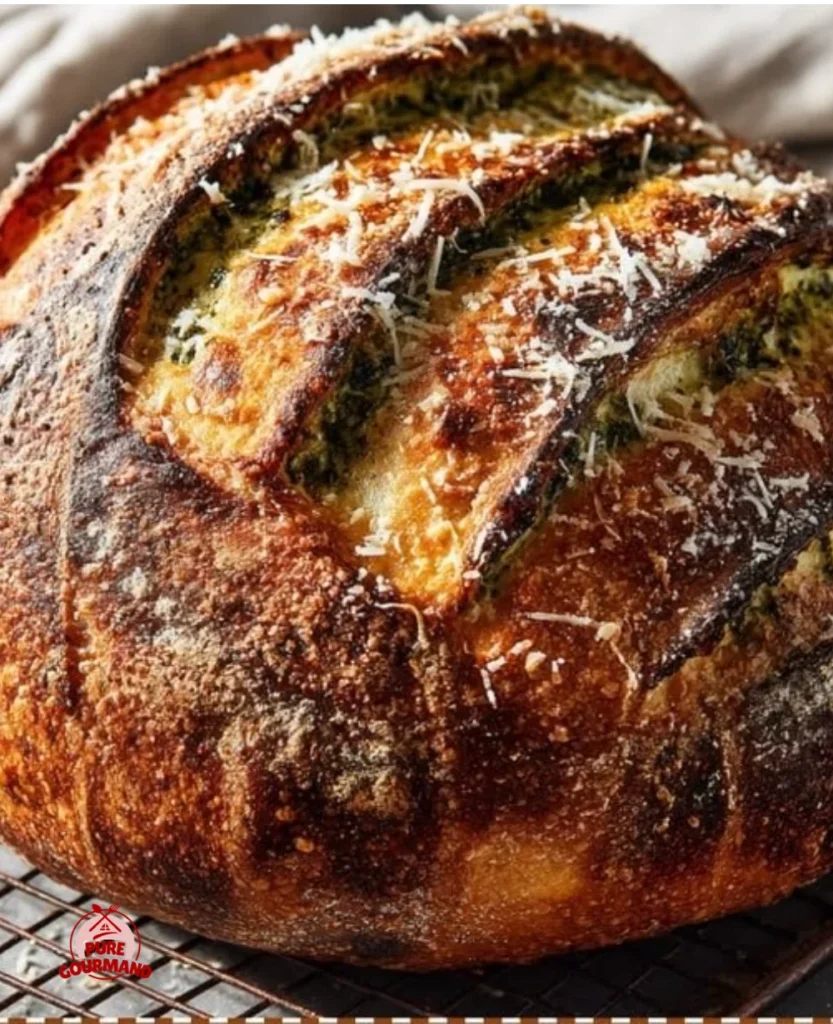
Imagine slicing into a golden crust, revealing the steam escaping from the soft, chewy interior flecked with vivid green swirls of pesto and bursts of cheesy flavor. This loaf isn’t just a way to showcase your sourdough skills; it’s also an edible superhero, ready to transform your sandwiches, elevate your cheeseboards, or simply stand alone with a smear of butter or a dip into olive oil.
Now, let me guide you through this delicious journey of crafting the Ultimate Cheesy Artisan Loaf that will fill your kitchen with delightful aromas and your heart with pride.
Recipe Timing
- Prep Duration: 30 minutes (plus 4-6 hours for starter)
- Active Cooking: 1 hour
- Total Duration: 16-30 hours (including fermentation times)
- Portion Size: 10 slices
- Complexity: Moderate
Nutritional Recipe
- Calories per portion: Approximately 230
- Protein: 8 g per serving
- Carbs: 30 g per serving
- Fats: 10 g per serving
- Fiber: 1 g per serving
- Sugars: 1 g per serving
- Sodium: 420 mg per serving
Why You’ll Love This Pesto Parmesan Sourdough: The Ultimate Cheesy Artisan Loaf
This sourdough loaf is perfect for anyone who craves a journey into flavor. Its robust and tangy personality comes from the fermented goodness of sourdough, while the pesto injects an herbaceous freshness that dances on your palate. And let’s not forget the Parmesan cheese, which brings in a creamy, umami kick that ties everything together beautifully. Plus, the texture? A crunchy crust meets a soft and airy crumb – it’s simply heavenly. Each bite transports you right into a quaint Italian kitchen, where family and friends gather around the table sharing memories and laughter.
The Complete Cooking Journey
Now that your taste buds are piqued, let’s roll up our sleeves and get baking! This culinary adventure does require some planning and patience, but trust me, every minute spent waiting for that dough to rise is well worth it. Let’s dive into the process.
Ingredients:
- 100 g active and bubbly sourdough starter (Should be at its peak, 4-6 hours after feeding.)
- 500 g bread flour
- 350 g warm water (around 85°F or 29°C)
- 10 g fine sea salt
- 1/2 cup pesto (Thicker pesto works best.)
- 1 cup freshly grated Parmesan cheese
Method:
Step 1: Feeding the Starter
Feed your sourdough starter 4-6 hours before you plan to mix your dough, allowing it to double in size and become very active.
Step 2: Mixing the Dough
In a large bowl, mix the flour and warm water until no dry spots remain. Cover and let rest (autolyse) for 30-60 minutes.
Step 3: Incorporating the Starter and Salt
Add the active starter and salt, mixing thoroughly until incorporated.
Step 4: Stretching and Folding
Perform a series of stretch and folds every 30-45 minutes for the first 2-3 hours of a 4-6 hour bulk fermentation. The dough will become smooth and elastic.
Step 5: Preparing for Pesto and Cheese
Gently stretch the dough into a large rectangle. Spread the pesto evenly over the surface, then sprinkle with grated Parmesan.
Step 6: Rolling the Dough
Fold the dough like a letter and roll it into a tight log.
Step 7: Shaping the Dough
Shape the dough into a boule or batard and place it seam-side up in a well-floured banneton.
Step 8: Cold Proofing
Cover and refrigerate for a cold proof of 12-24 hours. This long, slow fermentation enhances the flavor.
Step 9: Preheating the Oven
Preheat the oven and Dutch oven to 500°F (260°C).
Step 10: Scoring and Baking
Score the cold dough, then bake in the covered Dutch oven for 20 minutes. Remove the lid, reduce heat to 450°F (230°C), and bake for another 20-25 minutes until deeply golden brown.
Step 11: Cooling the Bread
Let the loaf cool completely on a wire rack for at least 2-4 hours before slicing. This is crucial for the crumb to set properly.
Serving Suggestions & Pairings
This Pesto Parmesan Sourdough is perfect alongside soups, salads, or as part of a cheeseboard. Try it toasted with a drizzle of good olive oil, paired with ripe tomatoes, or layered with grilled vegetables and a touch of balsamic glaze. You may also love using it to create gourmet sandwiches, like a Caprese with fresh mozzarella and basil.
Storage & Leftovers Guide
To keep your sourdough fresh, store it in a bread bag or wrapped in a clean dish towel at room temperature for up to 3 days. If you want to keep it longer, slice it and freeze individual pieces – this way you can pop them straight into the toaster as needed!
Kitchen Wisdom & Success Tips
- Be sure your starter is very active; it makes all the difference in the rise and flavor.
- Don’t skip the autolyse, as it helps develop the gluten structure.
- Monitor the bulk fermentation; warmer kitchens may require less time, so be attentive to the dough’s texture and volume.
- Use a sharp knife or lame for scoring to allow the bread to expand properly in the oven.
Flavor Variations & Adaptations
Feel free to play with flavors! Swap the basil pesto with sun-dried tomato pesto for a Mediterranean twist, or try adding a hint of roasted garlic and herbs de Provence.
Reader Questions & Solutions
-
What if my sourdough starter isn’t bubbly?
- Ensure you’ve fed it recently and give it more time to become active. If it still doesn’t bubble, it may need some adjustments to your feeding routine.
-
Can I use all-purpose flour instead of bread flour?
- While bread flour gives a better structure due to its higher protein content, you can substitute with all-purpose flour for a softer loaf, but expect a different texture.
-
Why is my bread flat?
- This can happen from insufficient gluten development or under-proofing; ensure you give the dough enough time to rise properly during each stage.
-
Can I add other toppings or fillings?
- Absolutely! Consider adding olives, sun-dried tomatoes, or even different cheeses to customize your loaf.
-
What if I can’t find thick pesto?
- You can make your own by blending basil, garlic, nuts, cheese, and olive oil until thick, or reduce store-bought pesto on the stove to achieve the desired consistency.
Wrapping Up
Creating the Pesto Parmesan Sourdough: The Ultimate Cheesy Artisan Loaf is more than just a baking project; it’s an experience filled with flavor and creativity. Each step connects you to your food, inviting you to engage your senses and unleash your culinary artistry. So roll up your sleeves and get started, because this extraordinary loaf awaits you in the kitchen. Happy baking!
Enjoy delighting your taste buds and sharing this cheesy, herb-filled wonder with everyone around you!